

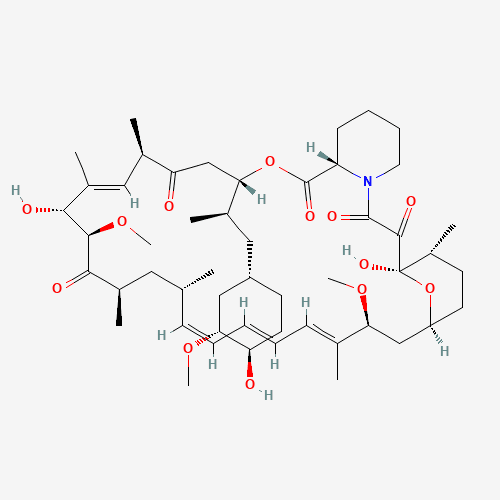
Rapamycin
rapamycin · sirolimus
mTOR inhibitor with the strongest evidence of lifespan extension in animal models.
⚠ Prescription drug — use only under medical supervision
The grade answers: What does the human evidence support for: mTOR inhibition?
Grade
Strong
The grade rates evidence quality — it is not advice to take or buy.
- Class
- mTOR / Autophagy
- Primary use
- mTOR inhibition
- Evidence strength
- high
- Last reviewed
- 2025-09-01
Prescription only
Available only on prescription. This entry is informational: we do not point to where to buy it and do not suggest a use.
Bottom line
The strongest lifespan data of any molecule here — but in animals. In humans it is a potent immunosuppressant, not a supplement; off-label 'longevity' use is experimental and must be managed by a physician.
What the evidence says
Key studies
- [1]
Rapamycin extends lifespan in genetically heterogeneous mice (ITP) · preclinical
Lifespan extended even when treatment starts in late-middle age — the landmark rodent result.
Open on PubMed ↗ - [2]
mTOR inhibition and immune function in older adults · RCT
Short-term mTOR inhibition improved vaccine response in older adults — a rare human signal, on a surrogate endpoint.
Open on PubMed ↗ - [3]
Rapamycin, aging and healthspan (review) · review
Consolidates the mechanistic and cross-species case.
Open on PubMed ↗
Scoped PubMed search, not a curated bibliography: the individual PMIDs for this entry have not yet been verified one by one. For that reason it is not used to support a high grade and is awaiting review.
Mechanism
Safety
Dosage context
Examples of application
- Used only under medical supervision — it is a prescription drug, not a supplement.
- In research, explored as intermittent low-dose rather than daily.
- Never self-experimented; off-label longevity use needs a physician.
From the field
Grade A for the strength of the preclinical evidence — not an invitation to use it. This is the molecule most often misrepresented in the longevity market: a real drug with real risks, sold to some as a casual supplement. It isn't one.
Related molecules
Follow this entry
We'll tell you if the grade for Rapamycin changes.
One review a week: new evidence, grade changes and what was updated. No hype, no promotions disguised as news.