

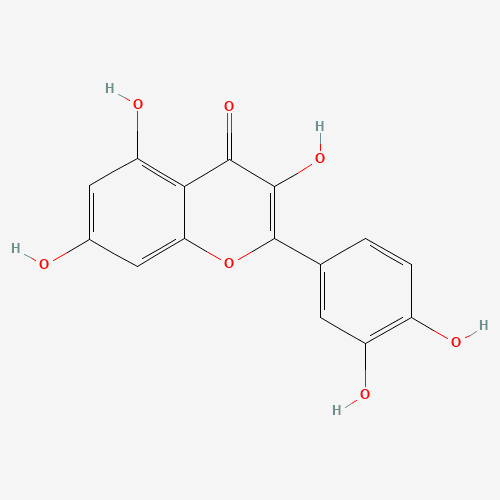
Quercetin
quercetin
A flavonoid with senolytic action, often combined with dasatinib.
The grade answers: What does the human evidence support for: Senolytic action?
Grade
Limited
The grade rates evidence quality — it is not advice to take or buy.
- Class
- Senolytics
- Primary use
- Senolytic action
- Evidence strength
- low
- Last reviewed
- 2025-09-01
Bottom line
A genuinely interesting idea — clearing 'zombie' senescent cells — but the human evidence is early, tiny, and mostly tied to the prescription drug dasatinib, not quercetin alone.
What the evidence says
Key studies
- [1]
First-in-human senolytic trial (dasatinib + quercetin) in pulmonary fibrosis · pilot trial
Early feasibility signal on physical function — very small, open-label.
Open on PubMed ↗ - [2]
Senolytics reduce senescent cell burden in humans (D+Q) · pilot trial
Showed a fall in senescent-cell markers — proof of concept, not proof of benefit.
Open on PubMed ↗ - [3]
Quercetin bioavailability and pharmacokinetics (review) · review
Absorption is low and variable, complicating dosing claims.
Open on PubMed ↗
Scoped PubMed search, not a curated bibliography: the individual PMIDs for this entry have not yet been verified one by one. For that reason it is not used to support a high grade and is awaiting review.
Mechanism
Safety
Dosage context
Examples of application
- Eaten in the diet (onions, capers, apples) as a flavonoid.
- As a supplement, sometimes taken with vitamin C for absorption.
- The senolytic D+Q protocol belongs in trials, not at home.
From the field
The senolytic field is promising but young, and quercetin is often marketed as if the D+Q trial results were its own. They aren't. We keep it at C and flag that the interesting protocols involve a prescription drug.
Related molecules
Follow this entry
We'll tell you if the grade for Quercetin changes.
One review a week: new evidence, grade changes and what was updated. No hype, no promotions disguised as news.